


A dental crown in South Gate is usually worth the money when there is not enough healthy tooth left to hold a filling, when a tooth has had root canal treatment, or when a cracked back tooth carries heavy chewing force. It is harder to justify on a small cavity that a filling can still support. What changes the answer is how much tooth structure remains, not how big the visible problem looks.
A crown is a covering that sits over a tooth prepared to receive it. The American Dental Association describes it as “a single, artificial tooth that fits over a real tooth that has been specially shaped.”
The value question is not really about the crown. It is about what is left of the tooth underneath and what happens to that tooth over the next several years without one.
At Simple Dental, we would rather explain that trade-off than quote a number in isolation. Contact us today to have a specific tooth looked at before you decide.
What Are You Actually Paying For With a Crown?
You are paying for coverage of the tooth’s outer structure, not for filling a hole in it. The American Dental Association puts the purpose plainly: a crown “can make your tooth stronger and improve its appearance.”
That word “stronger” is doing the work. A filling sits inside the remaining tooth and relies on that tooth to hold it, while dental crowns wrap the tooth and take the chewing load themselves.
This is why the same cavity can justify a filling in one tooth and a crown in another. Decay you can see matters less than how much sound tooth is standing around it.
When Is a Crown Worth It, and When Is a Filling Enough?
Three things move this decision more than anything else. None of them is the size of the dark spot on the X-ray.
How Much Tooth Is Left
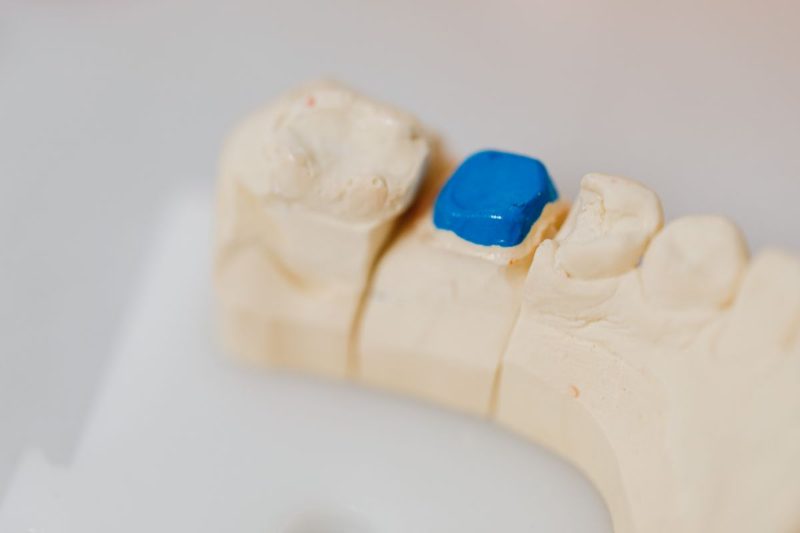 The American Dental Association states the threshold directly: a crown “can help strengthen a tooth with a large filling when there isn’t enough tooth remaining to hold the filling.” That is the whole test in one sentence.
A filling needs walls to hold it. Once too much of the tooth has been lost to decay, a previous filling, or a fracture, adding more filling material asks the weakest part of the tooth to carry the most force.
If you are told a tooth needs a crown, these are the questions worth asking. Ask how much sound structure is left and what is holding the current restoration in place.
Whether the Tooth Has Had a Root Canal
A tooth that has had root canal treatment has usually lost significant structure to the access needed to reach the canals. That access, plus the original damage, often leaves a shell rather than a tooth.
Back teeth in this position are the common case for a crown, because they take the heaviest force. Front teeth are sometimes restored differently, and that difference is worth asking about rather than assuming.
Not every treated tooth is automatically crowned. The honest answer depends on how much structure survived the treatment, and your dentist can show you what remains.
Where the Tooth Sits in Your Mouth
Molars do the crushing. The forces on a back tooth are far higher than on a front tooth, which is why a crack in a molar tends to get worse rather than stay still.
A visible front tooth changes the calculation, because appearance is part of the outcome. Both situations sit within restorative dentistry, and the right answer is rarely the same.
Position also affects what happens if a restoration fails. A failed filling on a molar can take more of the tooth with it than the same failure at the front.
How Long Does a Crown Have to Last to Be Worth It?
Longevity is where most people want a number, and honesty matters more here than a tidy figure. The published research covers direct fillings, not crowns.
A 2025 systematic review in Cureus reported median survival exceeding 16 years for amalgam fillings and about 11 years for composite, both in permanent back teeth. Annual failure rates ran from 0.16 to 2.83 percent for amalgam and 0.94 to 9.43 percent for composite. Its authors note their own limits, including wide variation in study design and follow-up length.
Those numbers say nothing about crowns, and nobody should present them as if they do. What they do show is that a restoration’s life is measured in years and is affected by material, position, and the habits of the person carrying it.
The more useful test is not a target number of years but a comparison with the alternative. If a tooth can no longer hold a filling, the choice is not crown versus nothing but crown versus losing the tooth and handling the gap later. Framed that way, the question worth putting to your dentist is what happens to this specific tooth without one.
Why Do Some Crowns Fail Early?
A crown that fails early usually fails for a reason that was present before it was placed. Knowing those reasons is how you protect the money you spend.
Decay at the Margin
 A crown does not make a tooth immune to decay. The join between the crown and the remaining tooth is still a surface that plaque collects on, and decay there undermines the whole restoration.
The same systematic review found that secondary caries, meaning new decay at the edge of an existing restoration, was the most common cause of composite filling failure. The principle carries over even though the numbers do not.
Margin decay is the failure mode you have the most influence over. Careful cleaning where the crown edge meets the tooth does more for a restoration’s life than almost anything else you do at home.
Grinding and Clenching
Heavy grinding puts loads on a restoration that it was not shaped to absorb. Grinding is a common reason that correctly placed work does not last.
If you wake with a sore jaw or your partner has mentioned the noise, say so before treatment rather than after. That changes what gets recommended and how the finished work is protected.
Grinding also explains a pattern people find confusing, where one crown lasts for years and another on the same person does not. The difference is often force, not workmanship.
The Tooth Underneath
A crown is only as sound as what it sits on. If the remaining tooth or the root has a problem that was not resolved first, the crown inherits it.
This is why an assessment matters more than a price comparison. A crown placed over an unresolved issue can look perfect and still fail, and the failure can cost more than the original work.
In some cases the more honest answer is that the tooth cannot be saved, and tooth extraction becomes the conversation instead. That is a harder discussion, and it should still happen before the work rather than after.
Where South Gate Patients Should Start
The question is never crowns in general but this tooth, this much structure, and this bite. A dentist can show you what is left on an X-ray and explain what changes if you wait, which is a firmer basis for the decision than a figure considered on its own.
At Simple Dental, we will walk you through what your specific tooth needs and why, including when a filling is still the better answer. Call us today to book an assessment in South Gate.
Medical Disclaimer: This article is for general informational purposes only and is not dental or medical advice. Every patient’s needs are different, and a consultation with a licensed dentist is required to determine the right treatment for you.
Frequently Asked Questions
Are dental crowns worth the money?
A crown is usually worth it when there is not enough sound tooth left to hold a filling, when a tooth has had root canal treatment, or when a heavily loaded back tooth is cracked. It is harder to justify on a small cavity that a filling can still support.
Why would you need a crown instead of a filling?
The American Dental Association’s answer is structural: a crown “can help strengthen a tooth with a large filling when there isn’t enough tooth remaining to hold the filling.” A filling relies on the surrounding tooth to hold it, while a crown covers the tooth and takes the chewing force itself.
How long do dental crowns last?
Crown lifespan varies by material, position in the mouth, bite forces, and how well the margin is kept clean. Published longevity research covers direct fillings rather than crowns, so any single figure quoted for crowns should be treated as an estimate, not a finding.
Is it cheaper to pull a tooth than to crown it?
Not necessarily. The American Association of Endodontists compares extraction with a root canal followed by a single tooth restoration, and notes that the extraction can be the more costly route once replacement is counted, because a gap can let neighboring teeth shift and replacing the tooth may need additional visits and further procedures.
Can a crowned tooth still get a cavity?
Yes. The crown itself cannot decay, but the natural tooth at the margin can, and new decay at the edge of an existing restoration is a common reason restorations fail. Cleaning carefully along the gumline where the crown meets the tooth is what protects it.
What happens if you do not crown a cracked tooth?
A crack in a tooth that carries heavy chewing force tends to progress rather than stay still. How fast depends on the crack’s depth and direction, and only an examination can establish that, but a crack that reaches the nerve or the root changes the options available.
Do you always need a crown after a root canal?
No. It depends on how much sound tooth structure survived the treatment and which tooth it is, since back teeth carry far more force than front teeth. Ask your dentist to show you what remains and to explain why they are recommending one approach over another.
How do I know if my crown needs replacing?
Signs worth an appointment include a visible gap or dark line at the gumline, sensitivity that is new, discomfort when biting, or a crown that feels loose or rough. None of these confirms a problem on its own, and an examination is what establishes whether the crown or the tooth beneath it is the issue.
 How Do I Find a Good Dentist in South Gate?