

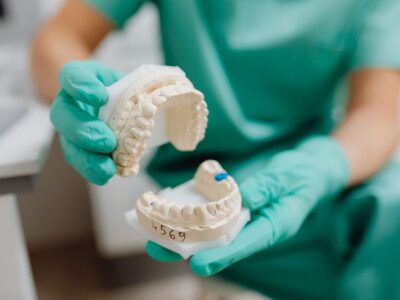
A general dentist typically handles restorative dentistry in South Gate, including fillings and crowns. Prosthodontics is the recognized dental specialty for patients with missing or deficient teeth, and endodontists and periodontists handle specific parts of the job. Restorative dentistry itself is a category of treatment rather than a specialty, so the more useful question is who will actually do your particular case.
Last Updated: October 19, 2026
Table of Contents
This post is general information and not a diagnosis. Ask your dentist whether this applies to you.
Restorative dentistry describes what the treatment does, not who is trained to do it. That distinction is the reason the question has no single-word answer.
The confusion is understandable, because the phrase sits on service pages next to words that genuinely are specialties. Sorting out which is which tells you what to ask before you agree to any work.
At Simple Dental, we would rather explain that distinction than let a label decide something for you. In many cases, the dentist planning a filling or crown is a general dentist, and specialists come in when part of a case falls inside their training.
The Difference Between a Dental Specialty and a Focus of Practice
A dental specialty is an area formally recognized by the National Commission on Recognition of Dental Specialties and Certifying Boards, which lists twelve of them. A focus of practice is simply where a dentist’s work concentrates, and while both can appear on one website, only the first is defined by an outside body.
What Recognition Actually Means
The Commission’s own definition is that a specialty is an area “formally recognized by the National Commission based on compliance with the Requirements for Recognition of Dental Specialties.” Recognition is a formal process, not a description a dentist chooses.
The Commission also says specialties are recognized where “advanced knowledge, skills and training are greater than those taught in a pre-doctoral dental education program.” In plain terms, a recognized specialty rests on training beyond dental school. That is worth knowing because it separates a credential from a description.
The Twelve Recognized Specialties
The list runs to twelve in total. They are Dental Anesthesiology, Dental Public Health, Endodontics, Oral and Maxillofacial Pathology, Oral and Maxillofacial Radiology, Oral and Maxillofacial Surgery, Oral Medicine, Orofacial Pain, Orthodontics and Dentofacial Orthopedics, Pediatric Dentistry, Periodontics, and Prosthodontics.
Three of those overlap most with restorative work. Prosthodontics covers patients with missing or deficient teeth, endodontics the dental pulp inside the tooth, and periodontics the gums and other tissues that support the teeth.
That list does not include restorative dentistry, which is a category of treatment rather than a specialty. General practices, ours included, provide a great deal of it.
What Sits Outside the List
Plenty of legitimate, skilled dental work sits outside the twelve. The Commission addresses this directly rather than treating it as a gap.
Its own wording is that “not all areas in dentistry will satisfy the Requirements for Recognition and be granted specialty recognition,” and that “the public and profession benefit substantially when non-specialty groups develop areas of interest through education, practice and research.”
So a dentist describing a focus of practice is not making a false claim. They are describing where their work concentrates, which is different information from a specialty credential and still useful.
Who Performs Restorative Dentistry in Practice
In many cases, the answer is a general dentist, since the American Dental Association’s Health Policy Institute reports that about one in five professionally active dentists names a recognized specialty as their area. Specialists enter when part of a problem sits inside their training, and the dentist planning your case can explain when that applies.
The General Dentist

General practice commonly covers restorative treatment, along with the examination and planning that come before it. Our own general dentistry page, for example, covers fillings, crowns, and root canal therapy.
A general dentist can also refer part of a case to someone else. That referral is part of planning rather than an admission of limits.
If yours is a straightforward case of a damaged tooth, you may already be with the right person. If it has been years since your last visit, our post on coming back to the dentist after years away covers what to expect when more than one tooth needs work.
The Prosthodontist
Prosthodontics is the recognized specialty for patients with missing or deficient teeth. The Commission’s definition covers the “diagnosis, treatment planning, rehabilitation and maintenance” of those patients.
Not every crown involves a specialist. General practices, ours included, place dental crowns as part of everyday care.
Whether a larger case calls for a prosthodontist is a question for the dentist planning it. Our post on whether dental crowns are worth the money covers when a crown makes sense and when a filling may be enough.
The Endodontist and the Periodontist
Endodontists work on the dental pulp, the inside of the tooth where root canal treatment happens. General dentists perform root canals too.
Periodontists treat the gums and other tissues that support the teeth. That matters in restorative planning, and our post on whether a deep cleaning is painful explains one common gum treatment. Both are recognized specialties on the list above.
Why Cosmetic Dentistry Is Not on the Specialty List
“Cosmetic dentist” is a familiar label, but cosmetic dentistry is not one of the twelve recognized specialties. The ADA’s MouthHealthy glossary defines cosmetic dentistry as services provided “solely for the purpose of improving your appearance, not your health,” which describes a purpose rather than a credential.
The distinction matters because cosmetic and restorative work overlap. A veneer is a thin shell made to cover the front of teeth, while the ADA notes that a crown “can make your tooth stronger and improve its appearance,” so one treatment can serve both aims.
What the label cannot tell you is what training sits behind it. The useful question is what someone has done, how often, and who handles the parts they do not do themselves.
Matching the Provider to the Problem
Start from the problem rather than the job title. The table below maps common restorative situations to who commonly handles them, using the specialty definitions above, and the right-hand column gives the question worth asking first, because its answer tells you more than any label on the door.
| What you need done | Who commonly does it | What to ask first |
|---|---|---|
| A filling or a single crown | General dentist | “Will you be doing this yourself?” |
| Root canal treatment | General dentist or endodontist | “What about this tooth decides that?” |
| Several teeth, or a changed bite | General dentist or prosthodontist | “What is the plan for the whole arch?” |
| Gum or bone problems underneath | General dentist or periodontist | “Does this get treated before the restoration?” |
Every row can start with a general dentist, and the middle column shows where a specialist may join. Our guide to finding a good dentist in South Gate makes finding out who will actually treat you its own step, for the same reason.
What This Means for South Gate Patients
The category name on a service page does not tell you who will hold the instrument, and that is the thing worth settling before treatment starts. Ask who does the work, what would send it elsewhere, and what happens to any part of the plan that is not done in-house.
If sudden tooth pain is what brought you here, our post on the ER or an emergency dentist for tooth pain covers that first decision.
At Simple Dental, we are glad to answer those questions before anything is scheduled. Call us today to ask about your own case, or schedule your visit through our South Gate scheduling page.
Frequently Asked Questions
What kind of dentist does restorative dentistry?
General dentists commonly provide restorative work such as fillings and crowns, and most dentists work in general practice. Prosthodontics is the recognized dental specialty for patients with missing or deficient teeth, and endodontists and periodontists handle specific parts of a case. Restorative dentistry is a category of treatment rather than a specialty in its own right.
Is restorative dentistry a dental specialty?
No. The National Commission on Recognition of Dental Specialties and Certifying Boards recognizes twelve dental specialties, and restorative dentistry is not among them. It describes a category of treatment, which is why general dentists commonly provide much of it alongside the specialties that overlap with it.
What is a prosthodontist?
A prosthodontist is a dentist who practices prosthodontics, the recognized specialty covering the diagnosis, treatment planning, rehabilitation and maintenance of patients with missing or deficient teeth. Specialties are recognized where the training goes beyond what dental school teaches, so it is fair to ask any dentist which training sits behind the title they use.
Do I need a specialist for a crown or a bridge?
Not always. Crowns are part of everyday care in many general practices, ours included. Whether a larger case, such as several teeth or a bridge, calls for a prosthodontist is a decision for the dentist planning it, so ask your dentist whether this applies to you.
What is the difference between cosmetic and restorative dentistry?
The two overlap heavily, and the labels describe emphasis rather than a clean division. Cosmetic work is defined by appearance, while many treatments serve both aims, since a crown can make a tooth stronger and improve its appearance. Neither is one of the twelve recognized dental specialties, so both describe categories of treatment.
Who does root canals, a general dentist or a specialist?
Both do. Endodontics is the recognized specialty covering the dental pulp inside the tooth, and general dentists also perform root canal treatment. Whether a case is referred depends on the tooth and the dentist, so ask what makes yours straightforward or not.
How many dental specialties are there?
Twelve are recognized by the National Commission on Recognition of Dental Specialties and Certifying Boards: Dental Anesthesiology, Dental Public Health, Endodontics, Oral and Maxillofacial Pathology, Oral and Maxillofacial Radiology, Oral and Maxillofacial Surgery, Oral Medicine, Orofacial Pain, Orthodontics and Dentofacial Orthopedics, Pediatric Dentistry, Periodontics, and Prosthodontics.
How do I know if my dentist can do the work I need?
Ask directly who will perform the treatment, how often they do that procedure, and what would make them refer it elsewhere. A clear answer to the third question is the most informative, because the willingness to name a limit says more than a list of services on a website.
 Is It Painful to Get a Deep Cleaning at the Dentist in South Gate?